
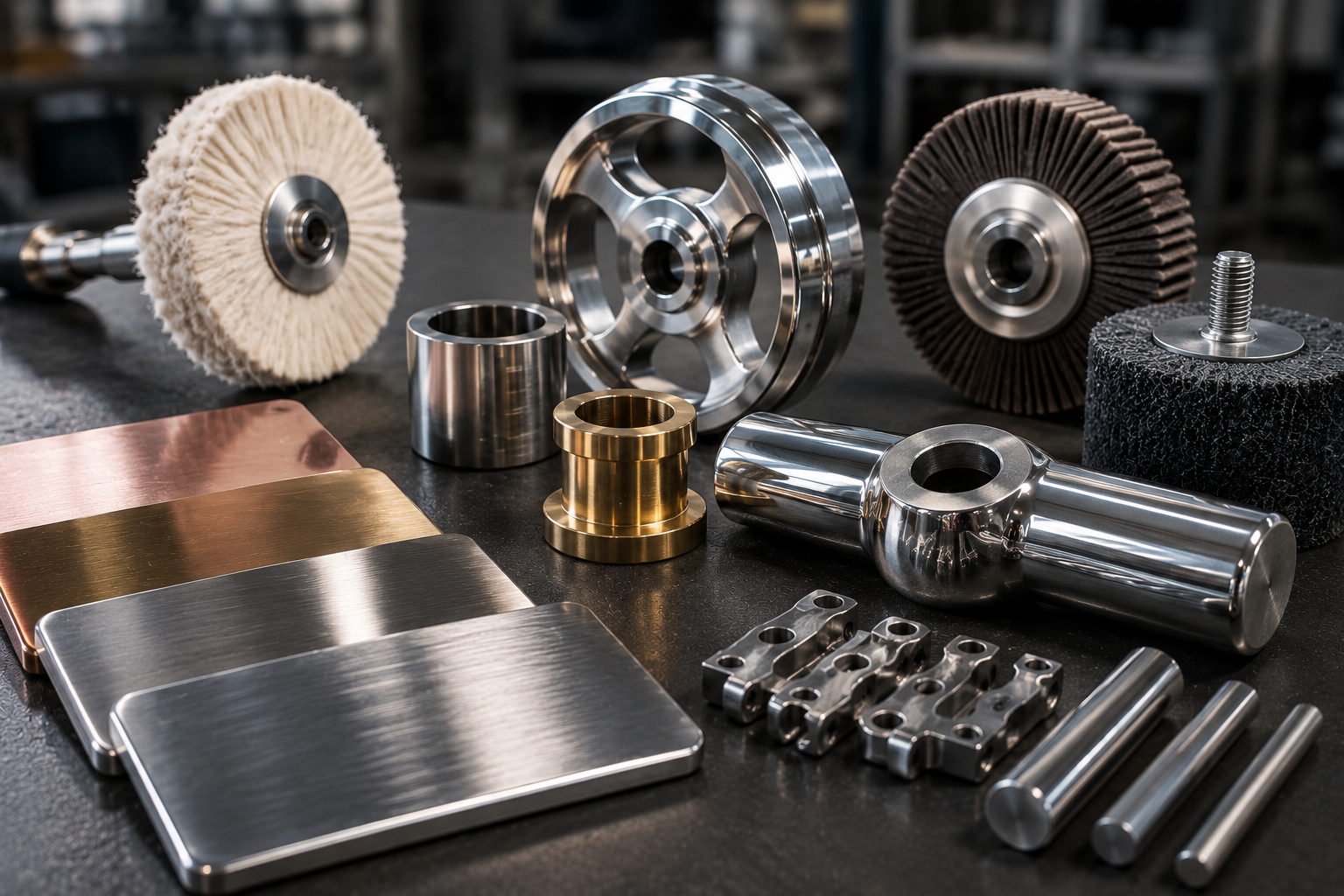
Surface quality rarely makes it onto a manufacturer’s priority list until a component comes back for rework. Inconsistent polishing, overlooked defects, and insufficient corrosion protection have a habit of surfacing at the worst possible moment. The right metal finishing supplier steps in before any of that happens, catching issues at the source rather than after they reach your customer.
From the first stage of material preparation through to the final protective coat, getting a surface right every time comes down to three things: the correct compounds, the appropriate equipment, and a process followed consistently at every step.
What Does a Professional Metal Finishing Supplier Service Typically Include?
Most manufacturers will tell you that surface finishing is involved at various stages of production. A professional metal-finishing service makes a significant difference in the outcome.
Comprehensive services involve:
- Using cutting, refining, and brightness compounds suited to a wide range of metal substrates
- Buffing wheels, mops, and sisal products are selected to match the compound and application method.
- Finishing pastes for hand-held machines and detailed manual work on intricate surfaces
- Mass-finishing products are designed for batch-processing applications.
- Technical guidance on compound selection, process sequencing, and equipment compatibility
- Protective surface treatments are applied after polishing to seal and preserve the finished result
Working with a single supplier who understands the nitty-gritty of metal finishing removes much of the guesswork. It makes it considerably easier to maintain consistent results across a full production run.
How Do Metal Polishing Services Improve Surface Quality and Durability?
There is a reason professional metal polishing services follow a defined sequence rather than jumping straight to the final finish. Each stage prepares the surface for what follows. Rush through the early steps or reach for an incorrect compound at the wrong point, and it will be reflected in the result.
Significance of each stage and compound in metal polishing services:
| 1 | Surface preparation | Remove scale, oxidation, contamination | Pre-treatment before cutting compound |
| 2 | Cutting compound | Eliminate scratches and surface defects | Raw metal and post-fabrication parts |
| 3 | Refining compound | Smooth surface, and improve consistency | Mid-stage finishing on all metal types |
| 4 | Brightness compound | Achieve final mirror or satin finish | Jewellery, cutlery, decorative fittings |
| 5 | Protective treatment | Seal surface against corrosion and wear | Industrial, marine, and food-grade surfaces |
When Should Manufacturers Utilise the Services of a Specialist Metal Finisher?
In-house finishing knowledge tends to develop gradually, often through trial and error. That approach works reasonably well when the substrate range is narrow and tolerances are forgiving. When a production process involves multiple metals, tighter visual standards, or surfaces that must satisfy specific compliance requirements, a specialist metal finisher becomes far more reliable than sourcing products from a general supplier and working things out along the way.
There are several situations where bringing in a specialist makes a genuine, practical difference:
- New production lines, where compound selection and process sequencing are still being established
- Ongoing quality issues where finishing results keep falling short of the specification
- New substrates where a metal or alloy enters the process that the team has not previously worked with
- Regulated applications where finished surfaces must meet food safety, hygiene, or corrosion resistance requirements
Addressing these situations before they become production problems is almost always less disruptive and less costly than correcting them after the fact.
What Types of Metals Can Be Treated with Industrial Metal Finishing Services?
Industrial metal polishing services cover a broad range of substrates. The metals most commonly treated across jewellery, cutlery, cookware, marine, and decorative manufacturing include:
- Gold, silver, and platinum: Usually used in jewellery and precision instrument components
- Stainless steel: Found in cutlery, cookware, hospital furniture, and food processing equipment
- Aluminium and aluminium alloys: Used in kitchenware, balustrading, and architectural fittings
- Brass and bronze: Common in decorative hardware, plumbing fittings, and musical instruments
- Chrome-plated surfaces: Found in appliances, automotive components, and domestic fixtures
- Nickel alloys and specialist metals: Mostly used across industrial and marine applications
No two metals respond the same way under an abrasive compound, and that difference matters more than most people initially appreciate. A compound built for hard stainless steel applied to something as delicate as gold will strip surface detail before there is any chance to correct it. Matching the compound to the specific metal is where a quality finish either comes together or unravels entirely.
How Do Metal Finishing Services Enhance Appearance and Corrosion Resistance?
A well-executed finish achieves two things at once. It brings the surface up to the visual standard the application demands and eliminates the microscopic irregularities where corrosion can take hold. Scratches, surface pitting, and inconsistencies left behind by an incomplete process are places where tarnish, rust, and oxidation tend to take hold first.
Working through the full sequence with an experienced metal finisher addresses initiation points before they become a field problem. Protective treatments applied over a well-polished surface also bond more effectively and hold up considerably longer than the same treatment applied over an unfinished substrate.
For components operating under demanding conditions, this distinction carries real weight. For example:
- Marine environments, where salt exposure works against surface integrity continuously
- Food processing and commercial kitchen setting, where hygiene standards require surfaces that are smooth, cleanable, and consistently maintained
- Outdoor architectural applications, where moisture, UV exposure, and weather contact are ongoing rather than occasional
How a surface is finished has a direct bearing on how long a component performs, how much ongoing maintenance it requires, and what it ultimately costs to replace when it wears out ahead of schedule.
A finish that holds up over time results from decisions made consistently throughout the process. A metal-finishing service that covers every stage, from preparation through to protective treatment, gives manufacturers the process control and consistency that reactive, piecemeal purchasing cannot deliver.
Polyshine: An Ideal Destination for Superior Surface Finishing
At Polyshine, we have been supplying professional metal finishing products across Australia since 2008, built on the Ferro range with manufacturing origins going back to 1968. We work alongside manufacturers, trade customers, and craftspeople in Australia, supporting applications across jewellery, cutlery, cookware, marine fabrication, and industrial manufacturing. We understand that surface quality is an integral part of metal production. Whether you are setting up a new finishing process or improving an existing one, we are here to help you get it right. Reach out to us or browse by substrate, industry, or compound type for your customised requirements. We are happy to offer you genuine advice and services.
Frequently Asked Questions:
- What does a professional metal finishing supplier service include?
It includes cutting, refining, and polishing compounds, buffing wheels, and finishing pastes. Services also cover process guidance and protective surface treatments. - How do metal polishing services improve surface quality and durability?
They follow a step-by-step process—cutting, refining, and polishing—to remove defects and create a smooth, durable finish. Skipping steps can reduce quality and lifespan. - When should manufacturers use a specialist metal finisher?
When results are inconsistent, new materials are introduced, or high standards like hygiene and corrosion resistance are required. Experts ensure reliable, compliant finishes. - What metals can be treated with metal finishing services?
Services cover stainless steel, aluminium, brass, bronze, chrome, nickel alloys, and precious metals. Each requires specific compounds for best results. - How do metal finishing services enhance appearance and corrosion resistance?
Polishing removes surface flaws, creating a smooth finish that holds protective coatings better. This improves both appearance and long-term corrosion resistance.