
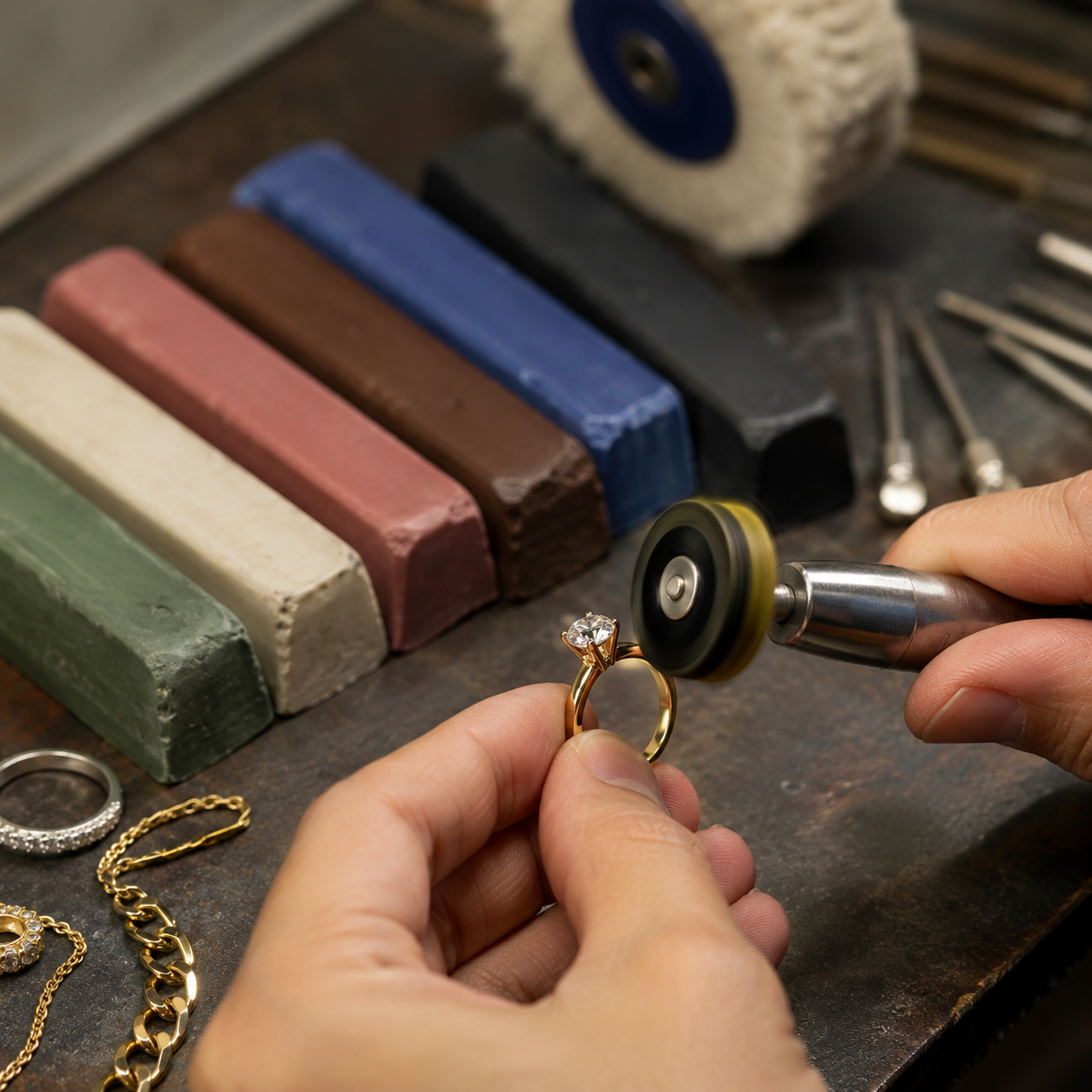
Whether you are a professional jewellery or someone caring for treasured pieces at home, selecting the right polishing compound for jewellery can make all the difference to your final result. From colour-coded compounds to specialised pastes, this guide explains the types available, how they work, and how to choose the correct one for your needs.
What Is a Jewellery Polishing Compound and How Does It Work?
A jewellery polishing compound is an abrasive material designed to remove scratches, tarnish, and surface imperfections from metal jewellery. It is available in bar, paste, and liquid forms and works by using fine abrasive particles to gradually cut away surface layers, leaving a smooth, high-lustre finish.
Compounds are applied using polishing wheels, buffing mops, or by hand, depending on the task and the required finish.
Types and Colours of Jewellery Polishing Compounds
Colour coding is one of the most useful ways to identify a jewellery polishing compound and understand its intended purpose:
| Colour | Common Use |
| Brown (Tripoli) | Cutting and pre-polishing on softer metals. |
| Red (Rouge) | Final high-gloss finish on gold, silver, and copper. |
| White | Finishing on aluminium, chrome, and stainless steel. |
| Green | Cutting and finishing on stainless steel and hard metals. |
| Blue | Final polishing on soft metals and plastics. |
| Black | Heavy cutting on hard metals. |
Jewellers and finishers across Melbourne, including those working in Dandenong, Bayswater, and Campbellfield, rely on these colour distinctions to work efficiently across different metals and surface types.
Polishing Paste for Jewellery vs Polishing Rouge
Although often confused, polishing paste for jewellery and jewellery polishing rouge serve different purposes in the finishing process.
Polishing paste for jewellery is a modern, versatile formulation well-suited to hand use or hand-held machines. It is easy to control, less messy, and often combines cutting and finishing in a single step. It is particularly practical for intricate designs and smaller-scale workshops.
Jewellery polishing rouge is a traditional compound, most commonly available in solid bar form, used in the final buffing stage to produce a mirror-like shine on precious metals such as gold and silver. It remains a trusted choice for professional jewellers seeking a flawless, high-gloss result.
Both have a clear place in a complete finishing workflow, and the best outcomes are often achieved when used in sequence.
Which Metal Polishing Compound Is Right for Your Jewellery?
Selecting the right metal polishing compound jewellery professionals depend on comes down to the metal type and the condition of the piece:
- Gold: A fine rouge compound delivers a deep, warm lustre at the final stage.
- Silver: Begin with a mild cutting compound and finish with white or rouge.
- Stainless Steel: A green or black cutting compound, followed by a white one, is recommended.
- Copper and Brass: Tripoli cuts effectively, with rouge applied for the final shine.
- Aluminium: White compound performs well across both cutting and finishing stages.
Metal finishers throughout Melbourne, Dandenong, Bayswater, and Campbellfield regularly combine compounds across multiple stages to achieve professional-grade results.
How to Choose the Right Compound for Your Needs
When selecting a jewellery polishing compound, consider these key factors:-
- Metal type: Different metals require different abrasive grades and compound formulations.
- Surface condition: Heavily scratched or tarnished surfaces need a cutting compound first.
- Desired finish: A mirror finish requires a fine finishing compound as the last step.
- Application method: Paste suits hand or machine use, while bar compounds work well with polishing wheels.
- Volume of work: Paste formats suit DIYers and small workshops, while bar compounds are better for higher-volume applications.
Achieving a professional finish on jewellery comes down to using the right product at every stage of the process. Whether you need a cutting jewellery polishing compound, a versatile jewellery polishing paste, or a classic jewellery polishing rouge, quality compounds are essential to any effective finishing workflow.
Find the Right Polishing Compound for Jewellery at Polyshine
Polyshine is a Melbourne-based metal finishing supplier that has been delivering professional-grade solutions to jewellers, manufacturers, and metal finishers since 2008. We offer the reputable Ferro range of products and provide high-quality products to clients across Melbourne, Dandenong, Bayswater, and Campbellfield. So, if you are looking for consistent, high-quality results, contact us now.
Frequently Asked Questions:
1. What is a polishing compound for jewellery, and how does it work?
A polishing compound for jewellery uses fine abrasive particles to remove scratches, tarnish, and surface imperfections from metal, leaving a smooth and polished finish. It is used with buffing wheels, mops, or applied by hand, depending on the application.
2. What are the different types and colours of jewellery polishing compounds used for?
Each colour indicates a specific abrasive grade and purpose. Brown (Tripoli) is used for cutting; red (jewellery polishing rouge) for final polishing on precious metals; white for aluminium and chrome; and green for harder metals such as stainless steel.
3. What is the difference between polishing paste for jewellery and polishing rouge?
Polishing paste for jewellery is suited to hand or machine use and often handles both cutting and finishing in a single product. Jewellery polishing rouge is a traditional solid compound used exclusively for the final high-gloss stage, particularly on gold and silver.
4. Which metal polishing compound is best for different types of jewellery?
The right metal polishing compound jewellery professionals select depends on the metal. Rouge is preferred for gold and silver, white suits aluminium and chrome, and green is recommended for stainless steel and harder metals.
5. How do I choose the right jewellery polishing compound for my needs?
Consider the metal type, surface condition, desired finish, and your application method. Starting with an appropriate cutting compound and finishing with a fine compound, such as rouge, delivers the best results for most precious metals.