
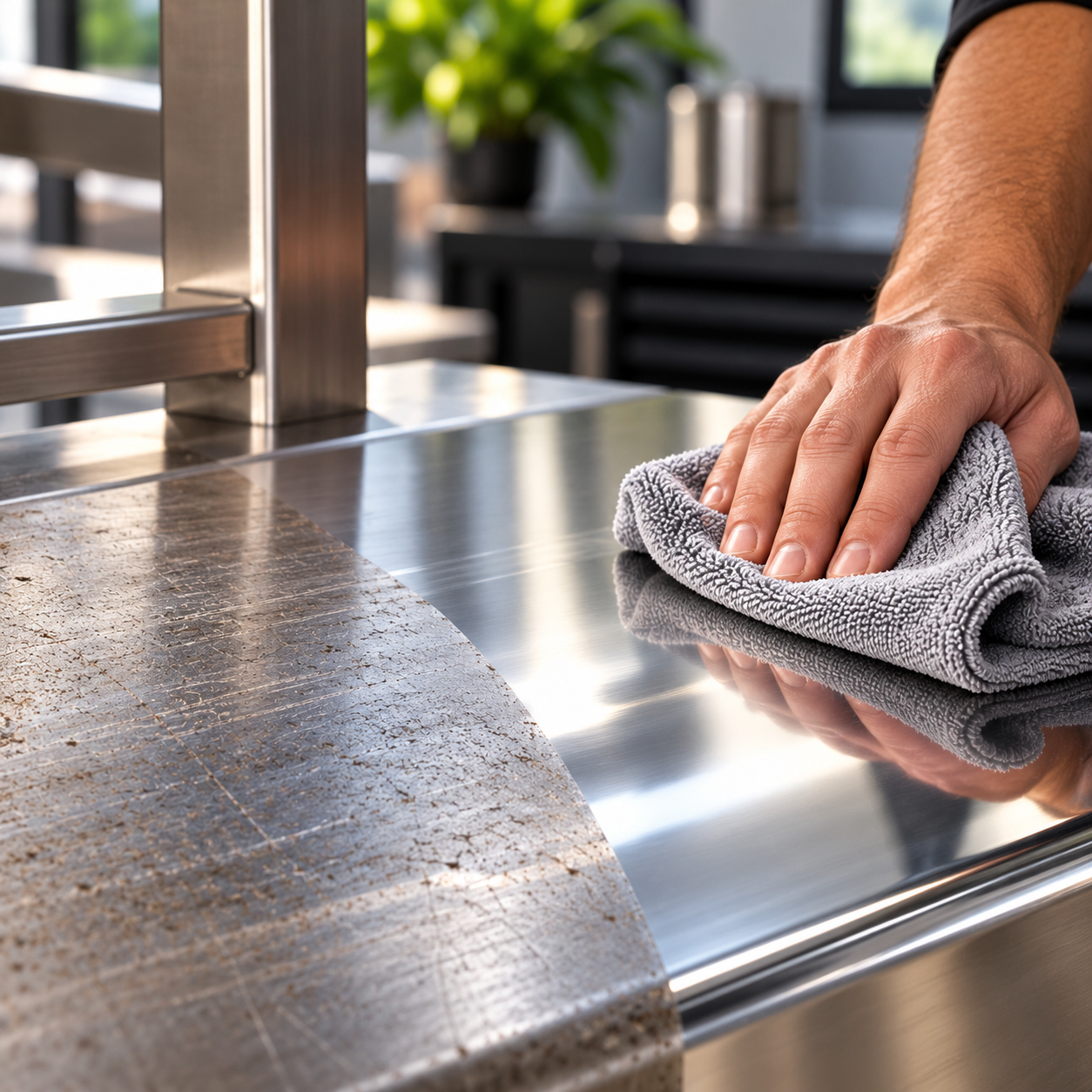
Getting a flawless finish on metal comes down to choosing the right product and using it correctly. Whether working on stainless steel, aluminium, chrome, or brass, the wrong product wastes time and can cause permanent surface damage. Be it metal polishing wax and liquids, each serves a specific role in the finishing process, and understanding the difference helps fabricators and operators across Melbourne, Dandenong, Bayswater, and Campbellfield get the result they are after.
According to IBISWorld, Australia’s metal coating and finishing industry is valued at $2.1 billion in 2025, with over 1,266 businesses operating nationally, reflecting how central surface finishing is to Australian manufacturing.
Understanding Metal Polishing Wax Versus Liquids
Metal polishing wax is a semi-solid compound that polishes and leaves a protective barrier after buffing. It suits hand application, smaller components, and surfaces that benefit from a layer of protection against moisture and oxidation.
Metal polishing liquids are fluid compounds that cut through oxidation, discolouration, and surface contaminants more aggressively. They spread evenly across larger surfaces and pair well with buffing machines in workshop environments.
The choice between them depends on the type of metal, the level of degradation, and whether the job is done by hand or by machine.
How to Use Metal Polishing Wax
The process for using metal polishing wax correctly is simple:
- Clean the surface to remove dust, grease, and contaminants before applying any product.
- Place a small amount of wax onto a soft cloth or a foam applicator pad before applying it.
- Work in small circular motions or with the surface grain, depending on the metal.
- Allow the product to haze before buffing off with a clean, dry cloth.
- Repeat heavily tarnished sections before moving to a finer finishing wax.
Rushing preparation leads to swirl marks and uneven gloss that require further correction.
Metal Polishing Liquids for Aluminium Surfaces
Aluminium oxidises quickly and scratches easily, making product selection critical. Metal polishing liquids for aluminium use finer abrasive grades and pH-balanced chemistry that remove surface oxidation without cutting into the metal itself.
Key points when selecting a liquid for aluminium:
- Choose fine alumina or silica-based abrasives rather than coarser mineral compounds
- Avoid high-acid-content products that can etch or dull the surface
- Work progressively from a cutting liquid to a finishing liquid on heavily oxidised sections
- Apply by machine across large flat panels for consistent compound distribution
For fabricators in Dandenong and Campbellfield working across both stainless steel and aluminium, keeping separate product lines for each metal prevents cross-contamination.
Choosing the Best Polishing Wax for Metal
The best polishing wax for metal varies by application:
| Metal Type | Recommended Approach | Key Consideration |
| Stainless steel | Fine-cutting liquid, then protective wax | Prevents water spotting and fingerprinting |
| Aluminium | Aluminium specific liquid, then finishing wax | Avoid coarse abrasives. |
| Chrome | Gentle wax by hand only | Chrome plating abrades easily |
| Brass and copper | Tarnish remover then sealing wax | Resealing prevents rapid tarnishing |
When to Use a Combination Approach
For heavily oxidised or pitted surfaces, starting with a liquid compound before finishing with a protective wax delivers better results than wax alone. The liquid smooths out the surface, while the wax forms a protective barrier over it. This two-stage method is standard in automotive fabrication, aviation, and industrial settings where surface finish quality and corrosion resistance both matter.
Get the Right Products from Polyshine
Polyshine supplies professional-grade metal polishing wax and liquids to fabricators across Melbourne, Dandenong, Bayswater, and Campbellfield. Built on the Ferro Finishing legacy since 2008, the range covers cutting compounds, buffing liquids, finishing waxes, and products suited to aluminium, stainless steel, chrome, and more.
With approximately 60 percent of products exported globally, every item has been tested in demanding finishing environments worldwide. Browse our full range and contact our team to find the right product for your surface and application.
Frequently Asked Questions (FAQs)
Wax is a semi-solid compound that polishes and leaves a protective layer, while liquids cut through oxidation more aggressively and are better suited to machine application on larger surfaces.
Clean the surface first, apply wax in circular motions with a soft cloth, let it haze, then buff off with a clean dry cloth. The application must be repeated on heavily tarnished areas before finishing.
Products with fine alumina or silica-based abrasives and pH-balanced formulas work best, removing oxidation without scratching the soft underlying metal structure.
It depends on the metal type. Stainless steel, chrome, aluminium, and brass each require different abrasive grades and formulations to achieve the right result.
Match the abrasive grade to the metal’s hardness, use a liquid compound on heavily degraded surfaces first, and finish with a protective wax to seal and preserve the result.